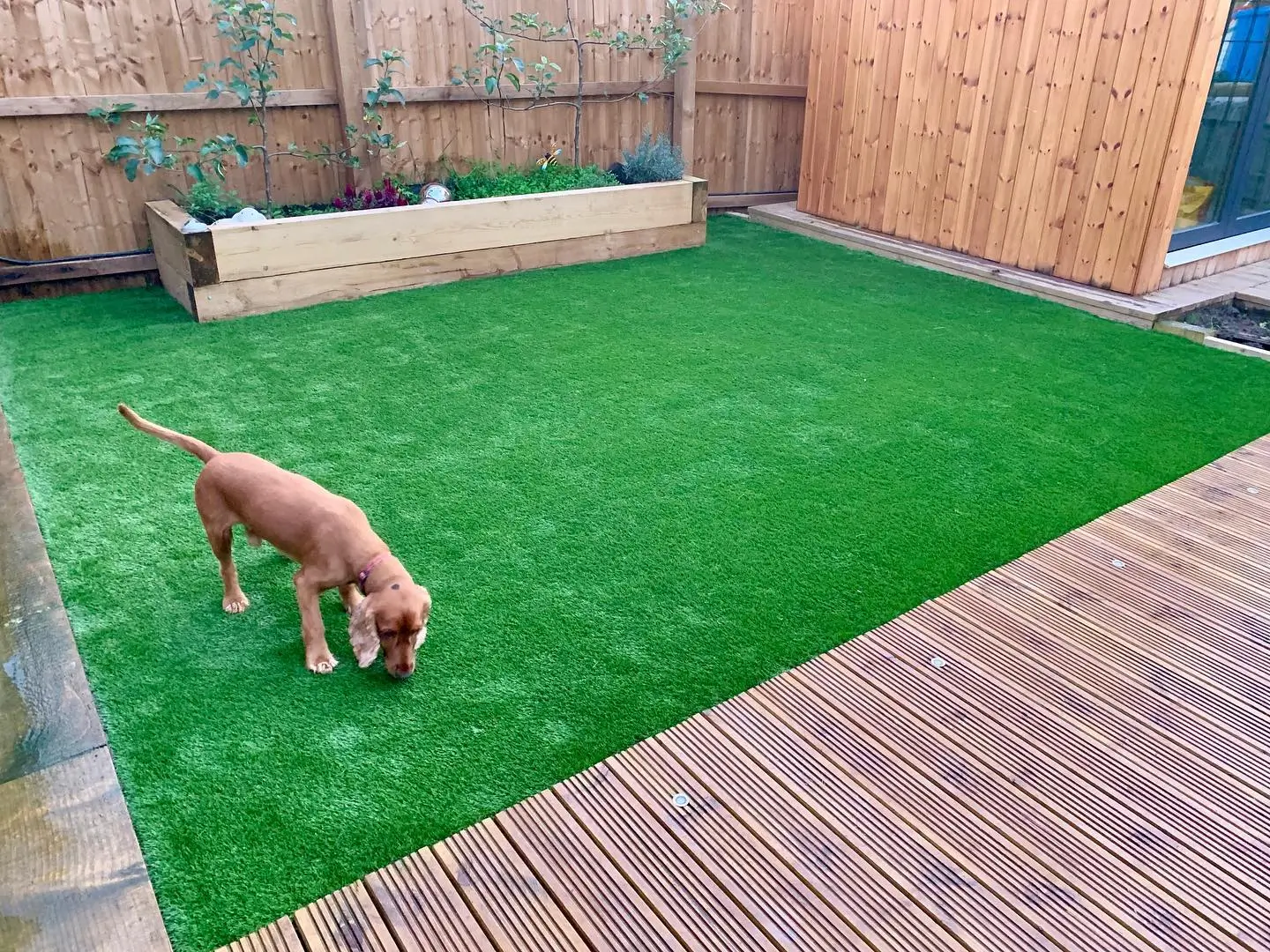
Artificial grass has plenty of worthwhile benefits — a major one being how it offers the joy of a lush green lawn without the fuss of tedious maintenance! With that being said, cleaning your artificial grass is the best way to keep your space in top condition. To help you keep your artificial turf looking fresh and vibrant all year long, we’ve put together this ultimate guide to cleaning artificial grass.
Whether you choose a weekly spruce-up or a more thorough monthly clean, follow these simple steps to ensure your artificial grass stays in top condition and provides a beautiful, low-maintenance outdoor space for years to come.
How To Clean Artificial Grass
Maintaining artificial grass is much easier and less stressful than maintaining natural grass. Let’s discuss each type of cleaning in detail so you can get the most out of your space.
Artificial Grass Weekly Clean
We suggest cleaning your artificial grass area weekly if it’s a particularly high-traffic area or you have pets. You may also want to do a weekly clean in the autumn and winter months, as debris is more likely to clutter the space.
Pick Up Any Mess
Whether you have children or pets, you can’t clean your outdoor area without a bit of a tidy-up first. Make sure that any pet messes are disposed of and that the general area is clear of any toys and equipment.
Remove Any Debris
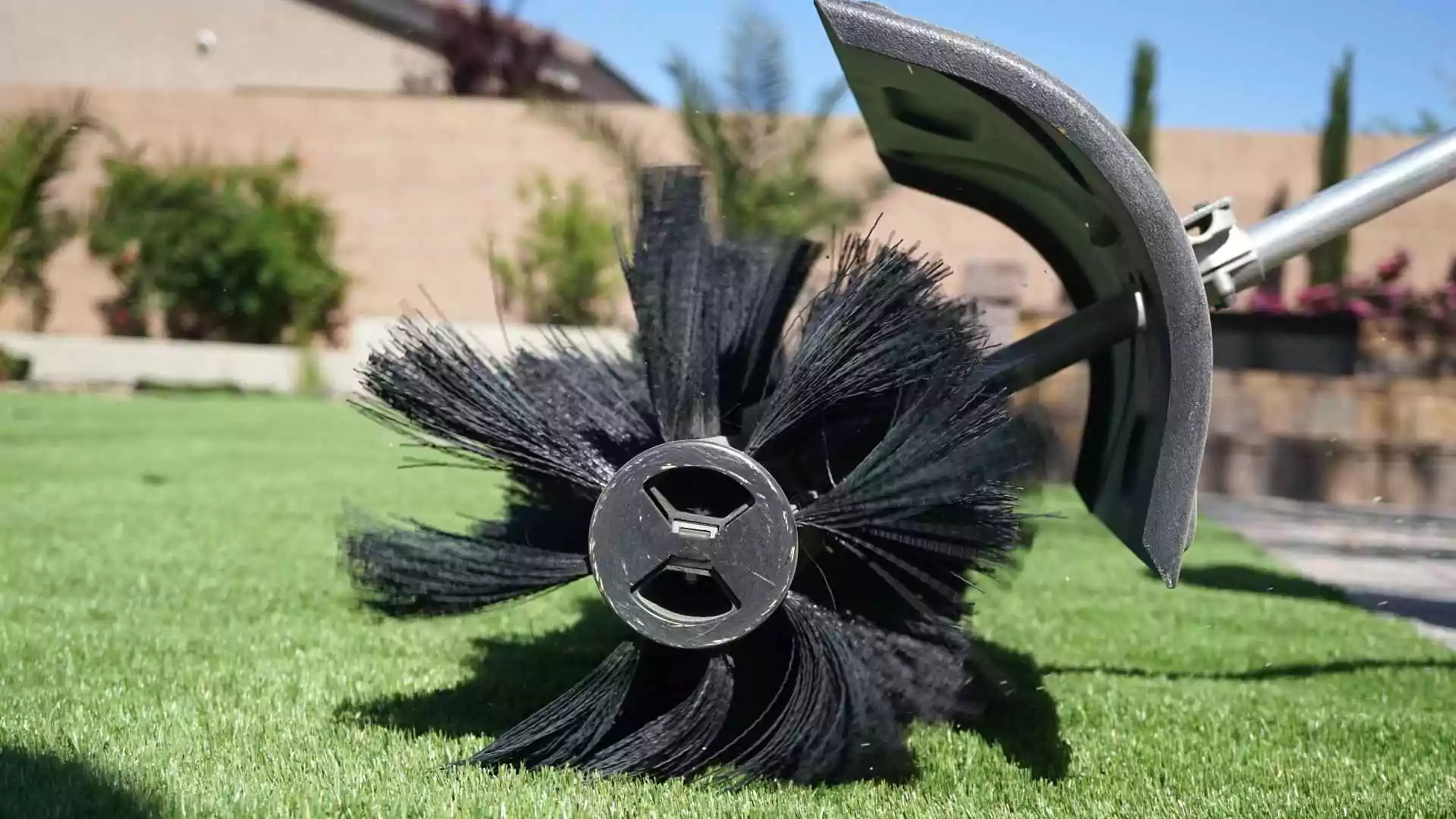
Grab a stiff brush, a rake, and a leaf blower if you have one. The leaf blower can be used for a quick clean, and a soft-tined lawn rake can be used to avoid damaging the grass fibres. Clearing any debris from your artificial grass is essential as this can help prevent moss and weeds from building up in the future.
Rinse Away
Grab your garden hose and spray it across your artificial grass to rinse away any remaining debris and leftover cleaning products. If you have children, focus more on the areas where they play, and if you have pets, make sure to give their toilet area an extra rinse.
Artificial Grass Monthly Clean
If you don’t use your outdoor space as much, a monthly cleaning of your artificial grass will suffice. This monthly cleaning schedule covers all aspects, ensuring that your artificial lawn is in the best condition.
Follow the two steps above to begin your monthly artificial grass cleaning, then continue with the routine below.
Brush The Grass
Once you’ve cleared any debris, it’s time to freshen up your grass. Grab the same stiff-bristled brush from the second step and brush it against the grain of the blades to fluff up the fibres.
Identify Any Stains
If you have children and pets, it’s always best to keep an eye out for any stains or lingering pet accidents, as they can lead to unpleasant odours or patches of discolouration.
Thankfully, cleaning away stains on artificial grass is simple. You may get away with using a mixture of warm water and soap on a cloth or sponge for small stains. For more stubborn stains, we recommend using a 1:1 mixture of water and white vinegar.
Look Out For Weeds
You can use this monthly cleaning routine as a chance to spot any weeds on your synthetic lawn. Remember, you’re most likely to find them growing around the edges. If you do find any, you can remove them manually or spray them with a weed killer.
If you’re having persistent problems with weeds growing on your artificial lawn, you may need to invest in a weed membrane or add a fresh substrate layer beneath the turf.
The issue may also be in the edges and seams, as weeds can form where the artificial grass meets the soil. If this is the case, we suggest applying a sealant or adhesive to prevent the gaps from allowing growth.
Replenish Your Artificial Grass Infill
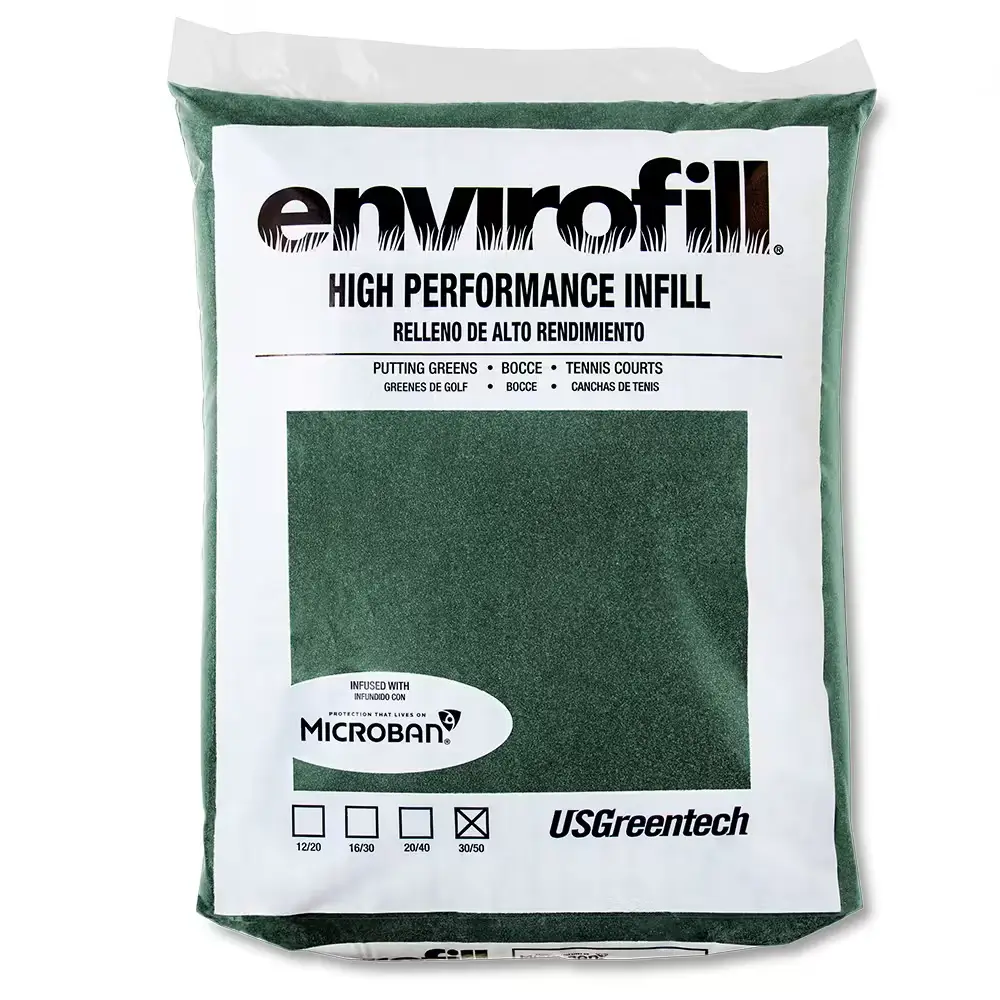
To support the appearance of your artificial grass, we always recommend investing in an infill. Infill is useful if you use your garden a lot, as it can help reduce the effects of wear and tear. It also:
- Keeps your grass fibres upright, preventing them from looking flat.
- Protects the backing material of your artificial grass.
- Adds softness.
- Prevents your turf from shifting or lifting, reducing the risk of weed growth.
- Maintains an even surface across your lawn.
- Helps maintain an effective drainage system by preventing water pooling.
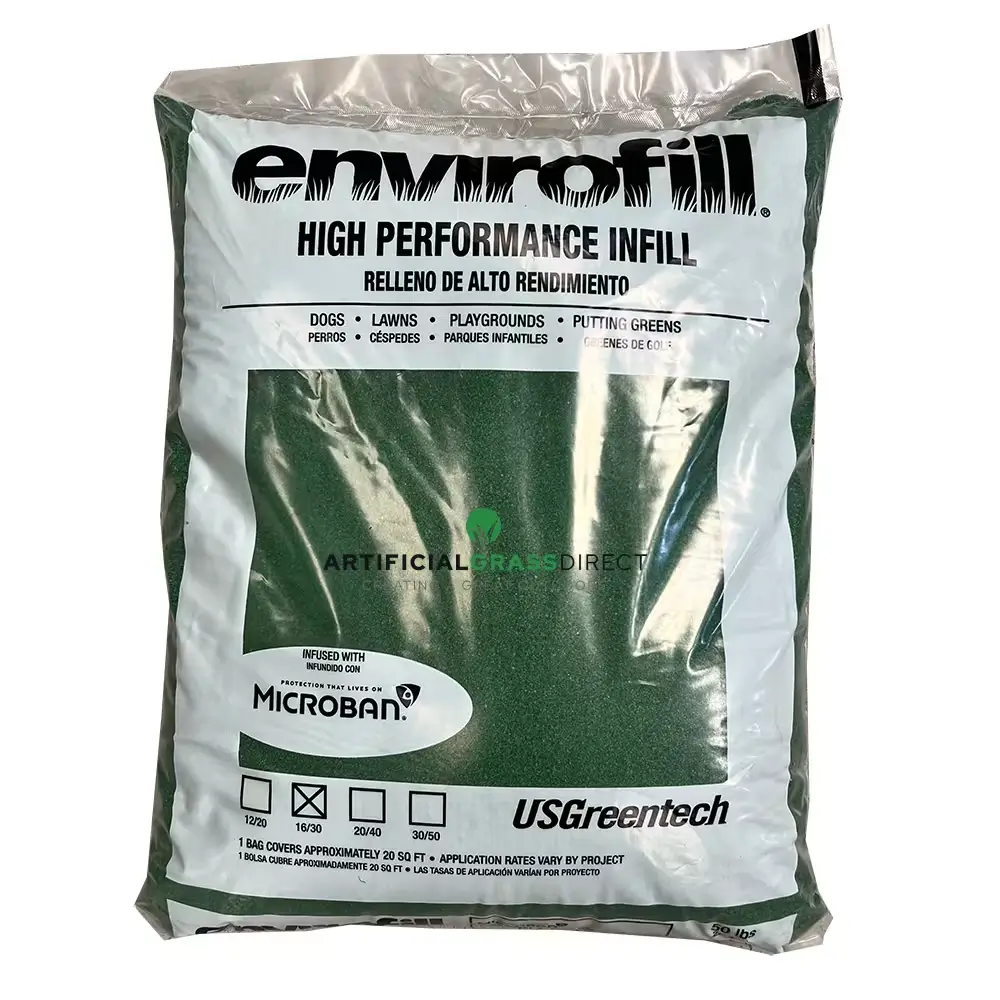
- Neutralises pet odours (especially if you’re using our Envirofill 16/30 Pet Infill!)
- Boosts the lifespan of your artificial grass.
Ongoing Maintenance Tips For Artificial Grass
We know that many of our customers love personalising their outdoor space with items like furniture and planters. After all, it’s what makes your space uniquely yours. However, it’s important to bear in mind that heavy objects can flatten the grass fibres, especially if they remain on the turf for a long time.
To avoid this happening, we recommend changing the structure of your furniture every so often or using protective pads beneath heavy objects to help with weight distribution.
Another tip for ongoing maintenance is to conduct regular inspections of the area, especially after a lot of use or after intense bouts of wind and rain. You can conduct a simple yet effective inspection by following the steps below:
- Check the edges and seams of your artificial grass turf for any lifting, gaps, or visible substrate and apply an adhesive to the edges or lifted undersides.
- Check for any signs of flattening or uneven infill distribution. Use a stiff-bristled brush to lift and restore the flattened fibres, and compact and level your infill when applying to ensure it’s evenly distributed.
- Check for any pooling water spots to determine whether your turf is draining as it should. If not, make sure that any lingering debris is cleared from drainage areas. It may also be worth adding drainbase fixings or a fresh layer of levelled aggregate beneath the turf to create a slope for water to run off effectively.
How To Clean Snow And Ice Off Artificial Grass
UK winters tend to be full of sleet, ice, and sometimes snow (if we’re lucky!). Thanks to the durability of artificial grass, clearing your artificial turf of snow and ice is easier than you may think.
If your outdoor space is covered in a sprinkling of light snow, then it will usually melt away without requiring any clearing. However, you should always remove more stubborn snow and ice as it can potentially compact the grass fibres.
Brush Off Any Heavy Snow
Use a soft-bristled brush to gently remove any snow from your artificial grass, ensuring that you work with the grain. A soft brush will prevent any damage to the fibres while clearing the area.
Never Use De-icing Salts
We know it can be tempting to reach for a quick fix, but the negative effects on your lawn will last much longer. De-icing salts can actually cause discolouration and damage to your turf, so we recommend alternatives like sand and cat litter. Once the ice has melted, you can simply brush the excess away.
If you only have a thin layer of ice over your lawn, it’s better to leave it to melt naturally rather than scraping or chipping away at it. This can also damage the grass fibres and even the backing of the artificial turf, making future issues like drainage and weed growth more likely.
How To Remove Moss From Artificial Grass
We always recommend using a solution consisting of equal parts white vinegar and water. This is the safest and most eco-friendly way to remove moss from synthetic grass.
- Once you’ve cleared any debris from the area, you can begin by gathering the essentials:
- White distilled vinegar
- Water
- A spray bottle
- Astiff brush
- A hose.
- Next, combine the vinegar and water into a spray bottle. For more stubborn areas of moss growth, you can increase the ratio to two parts vinegar and one part water.
- To lower the risk of any damage to your turf, we strongly advise that you test the solution on a small area first, looking out for any signs of discolouration or damage.
- Once you’re ready to remove the moss from your turf, spray the solution over the affected area, ensuring any moss is well-soaked. Leave it to sit for around 15 to 30 minutes, giving the solution time to break down the moss.
- Then, it’s time to grab your stiff-bristled brush. Brush the moss in circular motions, allowing the moss to loosen from the artificial grass fibres. If you’re dealing with a particularly tough area of moss, you may want to repeat this process a couple of times.
- Once the moss has cleared, grab a hose and rinse the area to clear any moss debris and excess solution.
How To Safely Disinfect Your Artificial Grass Lawn
Disinfecting your artificial grass is beneficial for maintaining general hygiene, especially if you have pets and children or regularly use your outdoor space for social gatherings.
Before you start disinfecting, you should always clear away any leaves, debris, and pet messes.
The Best Artificial Grass Cleaners
To disinfect your artificial grass, grab a gentle dish soap or a specialist artificial grass disinfectant, as well as a soft sponge or cloth. You’ll also need a trusty broom or brush and a hose with a spray nozzle.
To prepare the solutions, follow the instructions of your chosen artificial grass disinfectant or mix a few drops of dish soap into a gallon of water. We recommend using a soap solution for general cleaning and light disinfection.
If your goal is to neutralise odours and get rid of bacteria, you can also use a vinegar solution made of 1:1 white vinegar and water. We also recommend a fast-acting intensive artificial grass cleaner if you’re cleaning artificial grass on a sports ground, kennel, or similar commercial environment.
How To Disinfect Your Artificial Lawn
Start spraying your chosen disinfectant across the turf, paying close attention to high-traffic, play, and pet toilet areas. Let the solution sit on the turf for 5 to 10 minutes, allowing it time to kill germs and bacteria. For vinegar solutions, we suggest leaving the solution to sit for around 15 minutes.
Once the time is up, it’s time to scrub any stubborn spots using a sponge or cloth. This is also a good time to brush the grass to lift any flattened fibres.
When you’re finished, grab your hose and rinse the entire area. If you want to deodorise any areas, sprinkle some baking soda, letting it sit for 15 minutes, followed by a rinse.
Air drying is the best way to dry off your artificial turf after disinfecting it, but if you require a speedier solution, you can brush the grass to increase airflow.
Can You Jet-wash Artificial Grass?
It is possible to jet-wash artificial grass, but it is generally not recommended as it can damage the turf and potentially shift the infill. Plus, some types of artificial turf can’t withstand the high pressure of a jet washer, so you should always seek the manufacturer’s guidance beforehand.
If you decide to jet-wash your artificial turf, use low pressure to minimise damage to the grass fibres or turf backing. Always keep the jet-washer nozzle around one to two feet away from the surface, and use a wide spray nozzle when possible to even out the pressure.
Remember that excessive pressure can move the infill. If this occurs, we recommend brushing the grass afterwards to ensure it remains even and level.
Upgrade Your Outdoor Space With High-quality Artificial Grass
Now you know everything about cleaning and maintaining your artificial turf, it’s time to find the best product for your needs. Did you know that you can order up to six free artificial grass samples from us to help you decide?
If you have any other questions about cleaning artificial grass, don’t hesitate to contact our friendly team. We also have a blog filled with useful information about artificial grass uses, benefits, and installation.