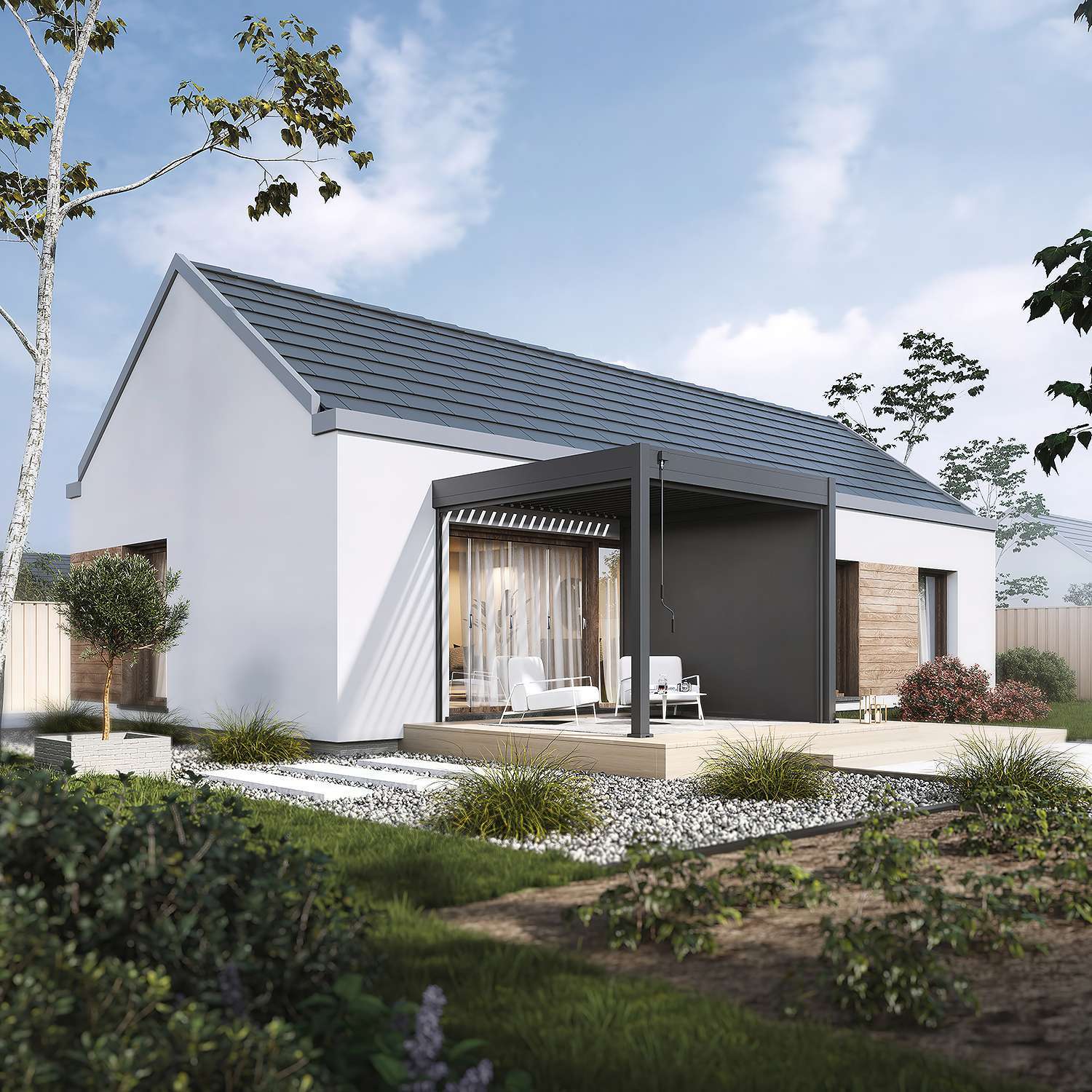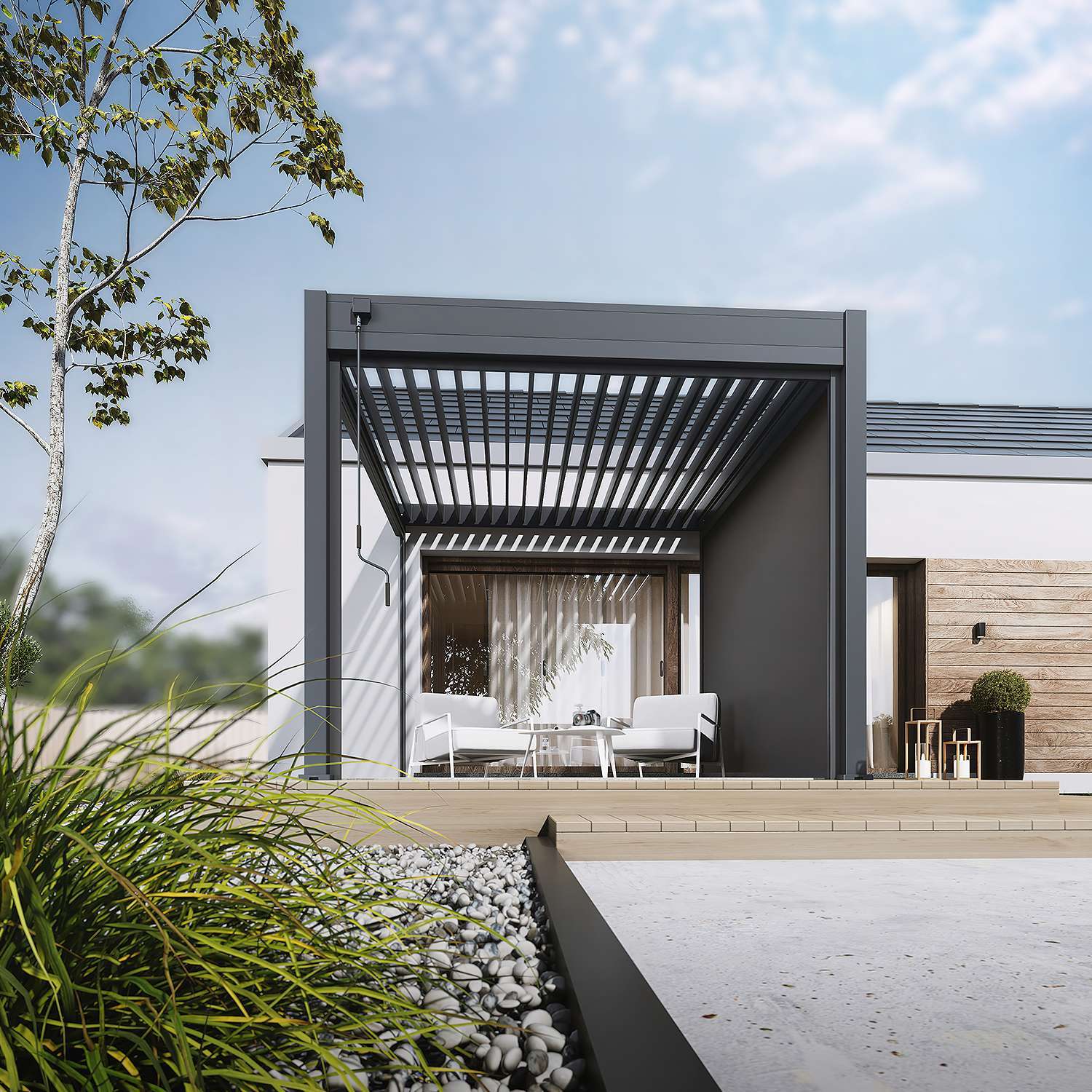


The main purpose of a pergola is to create a defined outdoor area that is more comfortable and practical to use. Depending on its design, a pergola can provide shade, offer some shelter and create a dedicated place for sitting or dining outside. Screens can add privacy, while the structure itself can help divide a garden into different areas.
The type of pergola makes a difference. A traditional timber pergola with an open roof offers different levels of shade and shelter to a modern aluminium design with adjustable louvres. If greater control over sunlight is important, a louvred pergola gives you more flexibility than an open structure.
Our pergolas include freestanding and wall-mounted aluminium designs, allowing you to choose a structure that works with the layout of your garden.
What Is A Pergola?
A pergola is an outdoor structure supported by posts, with a roof that can vary considerably depending on the design. Some pergolas stand independently in the garden, while wall-mounted versions connect to a property.
Traditional pergolas are often made from timber and have an open or slatted roof. They may also be used to support climbing plants. More contemporary pergolas can be made from aluminium and use adjustable louvres to give greater control over the area beneath them.
Some modern designs can also be combined with screens, lighting and suitable outdoor heating. These features change what the space can be used for, which is why two pergolas can serve quite different purposes.
| Feature | Traditional Pergola | Modern Aluminium/Louvred Pergola |
|---|---|---|
| Roof | Usually open or slatted | Adjustable or closing roof, depending on design |
| Shade | Partial or dappled | More controllable |
| Rain Protection | Limited | Greater protection depending on roof design |
| Material | Often timber | Usually aluminium |
| Typical Use | Decorative feature or plant support | Defined outdoor living area |
So, What Is The Main Purpose Of A Pergola?
There isn't one single pergola purpose that applies to every garden. Broadly, a pergola makes an outdoor area more defined and gives you some control over the conditions within it, without creating a fully enclosed garden room.
Think about an uncovered patio on a sunny day. There is little control over direct sunlight unless you add temporary shade. A pergola creates a permanent structure over that area, with the amount of shade and shelter determined by its roof.
A modern covered or louvred pergola can therefore sit somewhere between an open patio and an enclosed garden building. You remain outdoors, but the space has a clearer purpose and can be adapted around seating, dining or another use.
7 Practical Uses For A Pergola
What is a pergola used for in practice? These are seven of the most useful ways to incorporate one into a garden.
1Create Shade On Sunny Days
One of the main benefits of a pergola is the shade it can provide over an exposed patio or seating area.
The amount of shade depends on the roof. Traditional slats break up direct sunlight and create partial shade, but gaps remain between them. Adjustable louvres give you more control because their angle can be changed as the position of the sun changes.
Our Modena aluminium pergolas use manually adjustable louvres. You can open the roof when you want more sunlight and airflow, then adjust the louvres when more shade is needed.
2Create A More Sheltered Outdoor Space
Pergolas can provide shelter, although it is important to understand what the particular roof is designed to do.
Rain will pass through a traditional open pergola. A covered or closing louvred roof provides greater overhead protection, making the area beneath more practical during changeable conditions.
That can be useful in a British garden where a dry afternoon can quickly turn into a shower. It doesn't mean every pergola is waterproof, so check the weather protection and drainage specification of the model you are considering.
3Extend Your Living Space Into The Garden
A pergola can give activities that normally happen inside the house a natural place outdoors.
A wall-mounted design works particularly well for this because it can sit immediately outside patio or bi-fold doors. The area beneath could be somewhere for a morning coffee, an evening with friends or simply sitting outside without being completely exposed to the sun.
Lighting, compatible screens and suitable outdoor heating can also make the area useful beyond warm summer afternoons. Our guide to how to decorate and improve your pergola looks at these additions in more detail.
4Create An Outdoor Dining Area
A pergola gives an outdoor dining table a defined place in the garden while providing overhead shade according to the roof design.
Position matters here. Locating the pergola near a kitchen or suitable patio door can make carrying food, plates and drinks outside easier. You should also measure the table and chairs in use, rather than measuring the table alone, so there is enough room to sit and move around comfortably.
Pergolas can also be positioned around BBQ and outdoor cooking areas, provided appliance instructions and required safety clearances are followed.
5Zone Different Parts Of Your Garden
A pergola adds height to a garden, which can help visually separate one area from another without adding solid walls.
In a larger open garden, for example, a freestanding pergola can establish a seating area away from the house. In a long, narrow garden, placing a structure further along the space can create a destination rather than leaving everything concentrated around the back door.
The same idea can work for a reading area, hot tub or outdoor entertaining space. Furniture and planting can then reinforce the purpose of that part of the garden.
6Add Privacy
A pergola doesn't provide complete privacy by itself because its sides are generally open. Where overlooking is an issue, compatible screens or privacy panels can make the area feel more secluded.
This can be particularly useful in overlooked gardens or around a hot tub. The position of the pergola also matters, so consider neighbouring windows and sightlines when deciding where it will go.
Our range of pergola screens includes different options for adding screening to compatible structures without turning the area into a fully enclosed room.
7Create A Garden Focal Point
Some pergolas are chosen partly for what they add to the layout of a garden.
The height and defined footprint can frame outdoor furniture and give an otherwise unused patio or section of garden a clear purpose. Dark aluminium also works naturally alongside many contemporary garden materials.
A pergola could, for example, sit beside artificial grass, over composite decking or within a paved area. The important point is to consider the structure as part of the wider garden rather than choosing it separately from the surfaces and furniture around it.
Does A Pergola Actually Provide Shade?
Yes, a pergola can provide shade, but how much depends on the roof.
An open slatted pergola provides partial shade as sunlight passes through the gaps. The level of coverage will also change as the sun moves. A pergola with a fixed covered roof provides more consistent overhead coverage, although you lose the ability to open the roof when you want more sunlight.
A louvred pergola gives you greater control. On our Modena pergolas, the aluminium louvres are operated manually and their angle can be adjusted. Opening them allows more sunlight and airflow through the roof. Changing the angle creates more shade, while closing them provides greater overhead coverage.
If shade is your main reason for buying a pergola, look at the roof system rather than assuming every design will provide the same result.
Does A Pergola Keep You Dry?
Some pergolas provide considerably more rain protection than others.
An open timber pergola will allow rain through its roof, so shelter from wet weather isn't its main purpose. Covered and closing louvred designs can provide greater overhead protection.
The exact performance depends on how the individual pergola roof and drainage have been designed. If staying outside during showers is important to you, check the manufacturer's specification rather than assuming any roofed pergola is completely waterproof.
Freestanding Or Wall-Mounted: Does The Purpose Change?
The basic purpose remains similar, but where you want to create the outdoor area can make one design more suitable.
A wall-mounted pergola connects to the property, so it can work well when you want the space immediately outside your kitchen or living area. This arrangement suits patio dining and other activities that benefit from being close to the house.
A freestanding pergola supports itself and can be positioned separately. It can create a garden lounge further from the property, cover a hot tub or establish another distinct area.
If you're deciding between the two, our guide to freestanding pergolas vs wall-mounted pergolas covers the differences in more detail.
What Can You Put Under A Pergola?
What goes underneath should reflect how you actually want to use your garden.
| Idea | How The Space Could Be Used |
|---|---|
| Outdoor dining set | Meals outside and entertaining |
| Lounge furniture | Relaxed garden seating |
| Outdoor kitchen or BBQ | Cooking and dining, subject to appliance clearances |
| Hot tub | A defined relaxation area with optional screening for privacy |
| Suitable outdoor heater | Additional warmth where installation and safety guidance allows |
| Artificial grass or composite decking | A practical surrounding or underlying garden surface where suitable |
Measure furniture in its normal position before choosing a pergola. Dining chairs need room to pull out and lounge furniture can occupy more space than its basic dimensions suggest.
Are Pergolas Useful All Year Round?
A modern pergola can help extend the period in which you use your garden, although it shouldn't be treated as a fully enclosed all-weather room.
During spring, the structure can provide a defined place for the first outdoor meals as the weather improves. In summer, controlling shade becomes more important, particularly over exposed seating and dining areas.
Autumn brings shorter days and cooler evenings. Compatible pergola lighting and suitable pergola heating can help you continue using the space when conditions allow, while screens can provide additional protection around the sides.
Winter use will naturally depend on the weather and temperature. Even when you're spending less time underneath it, the pergola remains a permanent part of the garden layout.
What Are The Benefits Of An Aluminium Pergola?
Aluminium suits modern pergola designs because it provides a strong outdoor structure without the maintenance associated with regularly treating timber.
Our Modena pergolas are manufactured from high-quality, powder-coated aluminium and are designed to resist weather and corrosion. Their manually adjustable aluminium louvres also give you direct control over sunlight and shade.
The clean lines of an aluminium structure suit contemporary gardens particularly well, while compatible screens, heating and lighting allow the space to be adapted further.
If these are the features you're looking for, you can explore our full range of aluminium pergolas and compare the available sizes and configurations.
Is A Pergola Worth It?
A pergola can be worth considering if you already know what you want the space to achieve.
Someone with an exposed patio may value controllable shade. Another homeowner might want a permanent dining area, while someone with an overlooked garden may be interested in a pergola that can accept privacy screens.
It makes less sense to install one simply because you have an empty area to fill. A small garden may not comfortably accommodate the footprint, and someone who only wants occasional shade might find a portable option more appropriate. Planning or property restrictions can also affect where a permanent structure can be installed.
Start with the purpose rather than the pergola itself. Decide what you want to do outside, how much space you have and what level of shade or shelter matters to you. You can then judge whether a pergola is the right way to achieve it.
Choosing A Pergola For Your Garden
Before choosing a pergola, work through the practical questions that will affect how useful it is:
- Where will the pergola go?
- How much furniture needs to fit underneath?
- How much control over shade do you want?
- Is protection from rain important?
- Would additional privacy be useful?
- Does the space suit a freestanding or wall-mounted structure?
- Will you want compatible screens, heating or lighting?
Measure the proposed location carefully and check the exact dimensions and specifications of the pergola before buying.
Explore our pergolas to compare the available options.
The Purpose Of A Pergola FAQs
What is the main purpose of a pergola?
The main purpose of a pergola is to create a defined and more usable outdoor area. Depending on the roof design, it can provide shade and some weather protection over a seating or dining space. Modern pergolas can also be combined with screens, lighting and suitable heating to adapt the area around how you use your garden.
What is the point of a pergola if it has no roof?
Traditional pergolas usually have an open or slatted roof rather than a solid covering. The structure can still provide partial shade, support climbing plants and define a particular part of the garden. If greater shade or weather protection is required, a covered or adjustable louvred pergola may be more appropriate.
Do pergolas provide shade?
Yes, but the amount varies. Open slats provide partial shade, while an adjustable louvred roof gives you greater control over how much direct sunlight reaches the area underneath. Check the roof design of the individual pergola if shade is one of your main reasons for buying one.
Do pergolas protect you from rain?
Some designs provide greater rain protection than others. Traditional open pergolas allow rain through, while covered or closing louvred roofs offer more overhead protection. Performance varies between products, so check the specification of the pergola you're considering rather than assuming every design is waterproof.
Can you use a pergola all year round?
A pergola can remain part of your garden throughout the year, but how often you use the space beneath it will depend on the weather, roof design and accessories. Screens, suitable heating and lighting can make some modern pergolas more comfortable outside the main summer months.
Can you put a pergola on a patio?
A patio may provide a suitable location for a pergola if the surface and base meet the installation requirements of the chosen model. Pergolas need to be securely fixed, so check the manufacturer's installation guidance before preparing the area or making assumptions about an existing patio.
Can you put a pergola on decking?
Potentially, but suitability depends on the decking, supporting structure and pergola installation requirements. A pergola must be securely fixed to an appropriate base, so the decking surface alone should not be assumed to provide adequate support. Check the requirements for the exact pergola and seek installation advice where necessary.
Can a pergola add privacy?
Yes, when the design allows compatible screens or panels to be fitted. A standard open-sided pergola provides little privacy on its own. Screening and careful positioning can reduce overlooking while retaining the outdoor character of the space.
What is the difference between a pergola and a gazebo?
A pergola is typically an open-sided structure with an open, slatted, covered or adjustable roof, depending on the design. A gazebo usually has a fixed solid roof and provides more permanent overhead coverage. The exact distinction can vary between products, so the roof and construction are more useful considerations than the name alone.
Do you need planning permission for a pergola?
Pergolas may fall within permitted development in some circumstances, but the rules depend on the property, position and dimensions of the structure. Restrictions can also apply to particular properties and locations. Read our guide to planning permission for a pergola and check with your local planning authority if you're uncertain.
What Is The Purpose Of A Pergola? Our Final Thoughts
The purpose of a pergola comes down to how you want to use your garden. It can create shade over a sunny patio, provide more shelter with the right roof or establish a dedicated place for outdoor dining and seating. Pergolas can also help zone a garden and provide additional privacy when compatible screens are fitted.
Traditional open structures still have their place, but modern aluminium pergolas with adjustable louvres give you more control over the conditions underneath.
If a permanent outdoor area would make your garden more useful, browse our pergola range to compare the available sizes and designs. To speak to our team directly, you can call us on 01772 629654, email us at sales@artificialgrass.co.uk, or fill in our online contact form.